

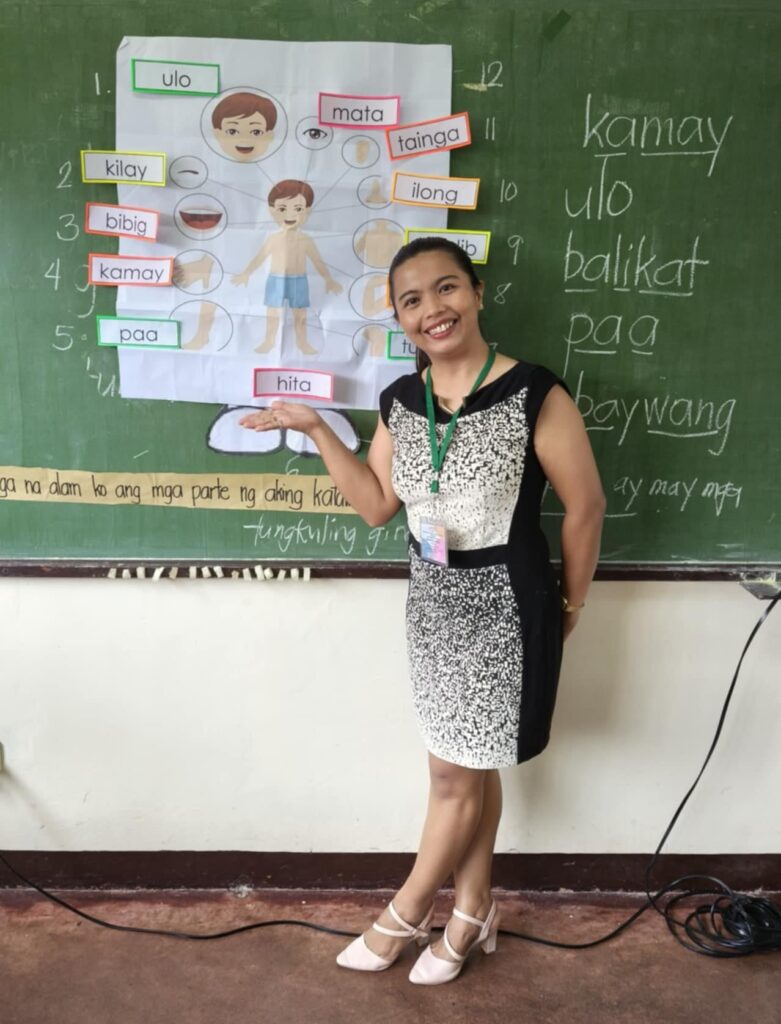
Diana Rose Castillo has been a Grade 1 language teacher for 15 years at the Mohon Elementary School in Batangas where she guides hundreds of students, as they write their first few words and learn to read more confidently.
Behind the scenes of her lively classes, she stands as one of the many educators on the frontlines of the country’s growing literacy crisis
In the 2022 Programme for International Student Assessment, which assessed 15-year old students enrolled in Grade 7 or higher, over 75% of Filipino students scored as low performers not just in reading, but also in math and science. The Philippines ranked 77th out of 81 countries, keeping near the bottom of global rankings since it first joined in 2018.
Castillo sees these numbers everyday in the classroom, from Grade 1 students struggling with letter and word recognition to Grade 6 students incapable of understanding what they just read.
To respond, she and colleagues created learning materials tailored to each student’s level. Using the Classroom Reading Level Assessment, a standardized assessment tool focused on evaluating word recognition, fluency and comprehension skills of Grade 1-3 learners, teachers identified which students are behind.
And once they did, she would stay after class to help slow readers. She does this without overtime (OT) pay, even as reading sessions often extended to over an hour.
“Wala pong OT. Pero kailangan po talaga ng mga bata [There’s no overtime pay. But the children really need it],” she said.
Still, the long hours with students aren’t enough. The literacy crisis has spiraled into one that no teacher can solve alone. The problem, she says, is often the lack of support at home.
“Kahit gaano kagaling ang teacher, kung walang tulong ng magulang, mahihirapan pa rin ang bata. [No matter how good the teacher is, without the parents’ help, the child will still struggle],” Castillo said.
Parental involvement
Several studies have underscored the role of parents in forming early reading habits. From the moment a baby is born, talking to them even before they understand helps lay the foundation for language. This constant verbal interaction sharpens their ability to process language, broadens their vocabulary and makes them attuned to the natural rhythms of speech and the rules of communication.
Parents who introduce their kids to books early give them a head start in school and a lasting advantage over their peers. Children exposed to reading in their formative years tend to perform better in school, especially in the primary grades, and often retain that edge throughout their academic journey, proving the effects are both long-term and deeply rooted.
Yet, despite these findings, many parents still believe teaching is solely the responsibility of schools.
“Ginawa mo na ‘yung lahat, pero minsan ang mga magulang hindi participative. Kaya ‘yung mga bata, lalo nalileft out [You’ve done everything, but sometimes parents aren’t participative. That’s why some children fall even farther behind],” she added.
“I-encourage natin ang mga magulang na makiisa. Partner talaga kayo [Let’s encourage parents to get involved. You are really partners],” Castillo said emphatically.
Small rewards
To get parents on-board, she devised a reward card system for home reading. Inside are weekly reading tasks and schedules for the tasks.
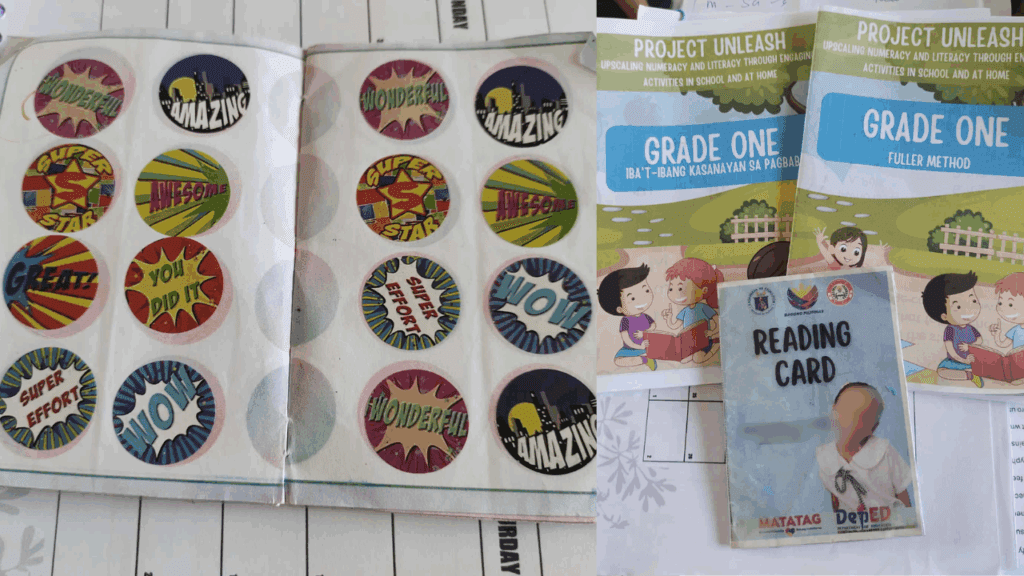
Laid out are the stickers Teacher Diana uses as small rewards for each reading task completed. The photo on the right shows the reading card that encourages kids to read at home. Photo contribution.
“May reading materials na ibibigay. Nakalagay din po doon kung kailan babasahin ni teacher para makita ng magulang kung kailan magbabasa ang bata [We give reading materials, and I write in the schedule so parents can see when their child is supposed to read],” she explained.
Through this, she hopes to help young learners build a study habit and understand the value of consistency. She emphasized that the reading doesn’t have to be long. Often, just ten minutes a day will do, especially for struggling readers. The key is reading daily.
“Yung simpleng pagbasa lang ng isang kwento sa bahay, malaki na ang epekto nun [Even just reading one story at home, that already makes a big difference],” she said. “Best na po sa akin ’yon, kapag ‘yung mga bata nagkakaroon ng study habits [That’s what’s best for me when students develop study habits].”
She sees it happen when a parent texts her back, when a notebook is signed or when a child talks about a shared reading moment at home.
True to mission
Now, transferred to Grade 6, Castillo is helping students cross the finish line of elementary school. Though the context has changed, her mission and dedication remains the same.
“Baka ito po talaga ang calling ko. Masarap maging teacher, lalo na kapag nakikita mong may pagbabago [Maybe this really is my calling. It feels good to be a teacher, especially when you see change],” Castillo said.
But she reminds that even the best teachers need partners, calling on parents, guardians and even older siblings to show up for their learners not just during report card distribution and graduation, but every day, in small ways, like a bedtime story, a read-aloud moment or a conversation.

