

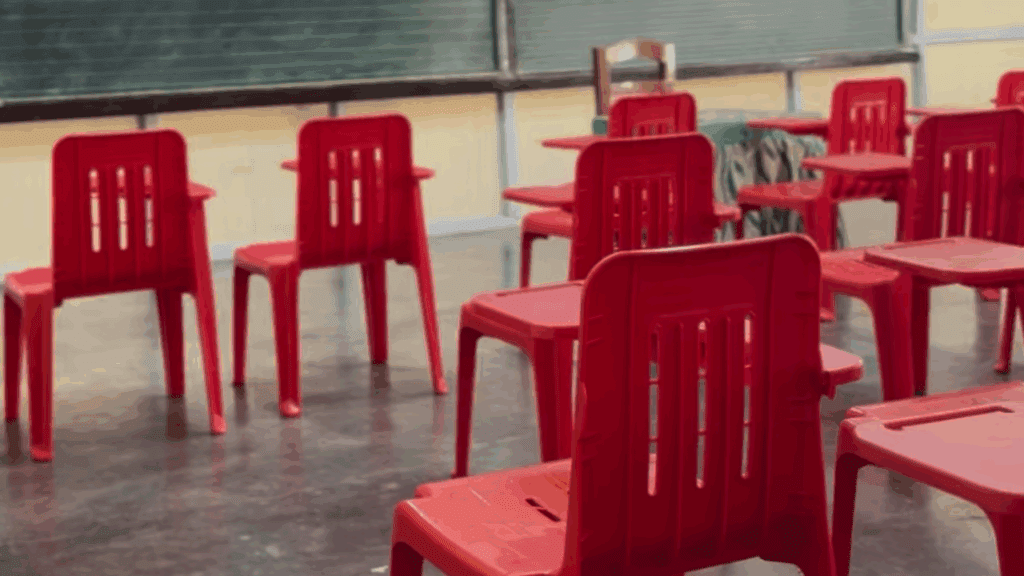
As the country grapples with a staggering shortage of 165,443 classrooms, questions continue to loom over how the government plans to ease the strain on the nation’s educational infrastructure.
In the latest episode of the BBM Podcast, President Ferdinand “Bongbong” Marcos Jr. answered that the government is turning to the private sector for reinforcements in hopes to accelerate classroom construction, stressing that the government cannot address the shortage alone.
“We have entered into a program to rebuild and to build more school buildings. Ginawa na naming PPP [Public-Private Partnership], kasi kung gobyerno lang ang gagawa, kakaunti ang magagawa natin,” Marcos said.
The announcement came in the wake of Department of Education (DepEd) Secretary Juan Edgardo “Sonny” Angara’s statement, warning that the country’s massive classroom backlog in classrooms could take up to 55 years to address.
Advantages
Angara earlier presented to President Marcos an outline of the proposed plan to address the classroom shortage through PPPs, targeting the construction of 15,000 classrooms by 2027.
The initiative, under PPP School Infrastructure Project (PSIP 3), will provide learning spaces to more than 6000,000 students nationwide and is expected to generate at least 18,000 jobs as well.
DepEd has also mapped out plans to expand classroom construction, targeting 30,000 and eventually 60,000 additional classrooms through the upcoming PSIP 4 and PSIP 5 phases.
The Second Congressional Commission on Education (EDCOM II) earlier recommended the use of PPPs to help address the classroom backlog and accommodate the growing student population. However, it emphasized the need for tighter safeguards and more stringent contract provisions for private concessionaires involved in school infrastructure projects.
The recommendation follows a 2017 Commission on Audit report, which flagged delays in the implementation of the P20.14-billion PPP projects meant to address the shortage in classrooms.
Budget boost urged
For the Alliance of Concerned Teachers – Philippines (ACT) Chairperson Vladimer Quetua, the responsibility of providing quality education falls on government and not the private sector.
“”Hindi dapat ipasa sa pribadong sektor ang responsibilidad ng gobyerno na magbigay ng dekalidad na edukasyon. Dapat direktang pondohan ng estado ang mga pangangailangan ng sektor (The responsibility of providing quality education should not be passed on to the private sector. The government must directly fund the needs of the education sector),” he said in a statement.
In 2025, DepEd’s approved budget stood at P737 billion, lower than its proposed P748 billion.
A Philippine Institute for Development Studies (PIDS) study showed that public sector spending accounts for 3.1% of GDP in 2019. While this marks a rise from the 2.1% in 2005, it remains below the recommended 4-6% level under the Incheon Declaration.
Adopted by 160 countries at the World Education Forum in 2015, the Incheon Declaration constitutes the commitment of the education community to to meet global education goals under the 2030 Agenda for Sustainable Development

